When trade cryptocurrency in CoinByte, one of the first choices you’ll face is whether to place a market order or a limit order.
1. What Is a Market Order?
A market order tells the exchange to buy or sell a crypto asset immediately at the current best available price.
- Market buy order: you purchase from sellers offering the lowest ask price.
- Market sell order:you sell to buyers with the highest bid.
Pros of Market Orders:
- Fast execution.
- Useful in highly liquid markets.
- Ideal for urgent trades.
Cons of Market Orders:
- Have no control over the exact execution price.
-In low-liquidity markets, large orders may suffer from slippage, meaning you may pay more (or receive less) than expected.
2. What Is a Limit Order?
A limit order allows you to specify the exact price at which you want to buy or sell an asset. The trade will only execute if the market reaches your target price.
- Limit buy order:sets the maximum price you're willing to pay.
- Limit sell order: sets the minimum price you're willing to accept.
Pros of Limit Orders:
- You control the price and avoid overpaying or underselling.
-Useful in volatile or illiquid markets to avoid slippage.
-Ideal for setting entry and exit strategies in advance.
Cons of Limit Orders:
- Your order might not be filled if the market never reaches your specified price.
-Slower execution — not suitable when immediate action is needed.
3. Example of market order and limit order
Imagine Bitcoin is trading at $30,000.
If you place a market buy, you might pay $30,020 due to slippage and current seller prices.
If you place a limit buy at $29,800, the order will only execute if BTC price drops to that level.
4. How to Place Orders on CoinByte
To learn how to place Market Order: Please click here
To learn how to place Limit Order: Please click here
Disclaimer
This article is for informational purposes only and does not constitute financial, legal, or investment advice. Cryptocurrencies are subject to market risk and volatility. Please consult a qualified advisor before making any investment decisions.
© 2025 CoinByte. Some content in this article may have been adapted or generated with the assistance of AI tools.
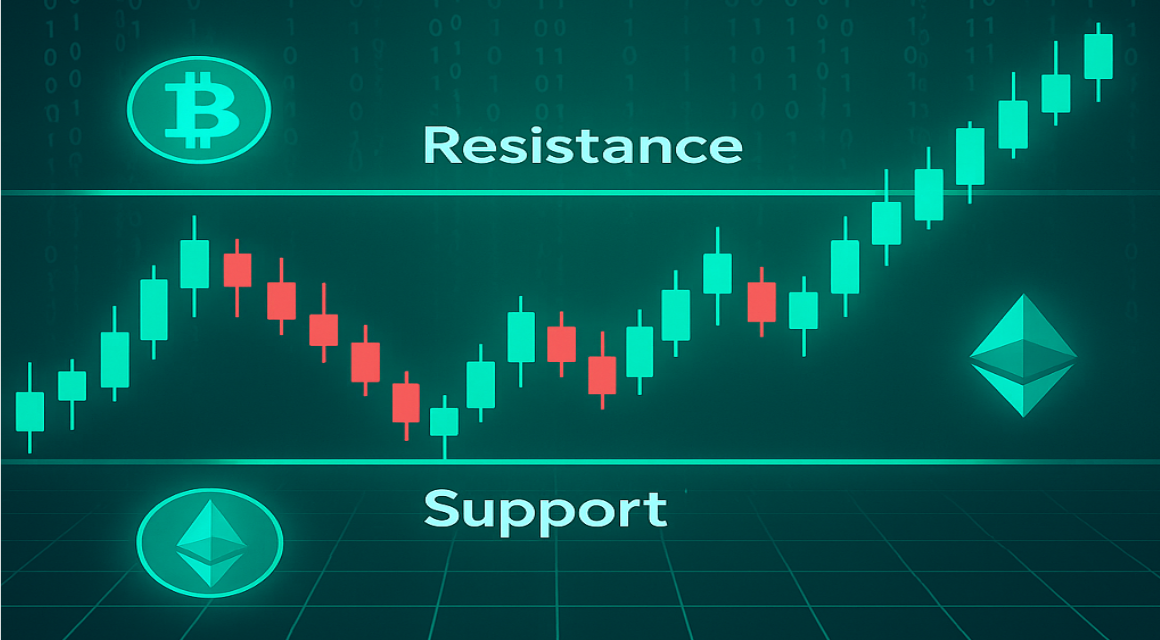 交易思路How to Identify Support and Resistance Levels in Crypto ChartsSupport and resistance help traders spot price zones where crypto assets are likely to pause, bounce, or reverse.
 交易思路Dollar-Cost Averaging (DCA): Recurring BuyWhat Is Dollar-Cost Averaging (DCA)?cryptocurrency can be intimidating, especially with its high volatility. One proven strategy to manage risk and build long-term positions is Dollar-Cost Averaging (DCA). DCA is an investment strategy where you divide your total investment into smaller, fixed amoun
 交易思路TradingView for CryptoTo learn how to use CoinByte's TradingView and it's tools.